Garcinia Cambogia for Weight Loss: The Evidence Is Much Weaker Than the Marketing

I wouldn’t count on Garcinia cambogia for meaningful weight loss. In randomized trials, users lost about 0.88 kg more than placebo on average, but the result was borderline and disappeared when researchers removed several small, unusually favorable studies. Longer-term benefits haven’t been established, and rare reports link Garcinia products to serious liver injury. If you’re considering a supplement, check its ingredients and discuss risks with a clinician; I’ll explain what the evidence and safety concerns mean for your choices.
Key Takeaways
- Garcinia cambogia’s weight-loss benefits remain unproven; studies have not shown meaningful, lasting results.
- A review found users lost just 0.88 kg more than placebo on average, with borderline statistical significance.
- Removing three small, unusually favorable trials erased that apparent benefit; larger, higher-quality studies found no significant effect.
- Claims that Garcinia burns fat, suppresses appetite, or guarantees rapid weight loss exceed the human evidence.
- Side effects can include nausea and diarrhea, and rare reports link Garcinia products to serious liver injury.
Does Garcinia Cambogia Help With Weight Loss?

Garcinia cambogia hasn’t been shown to produce meaningful weight loss. When you ask, “does garcinia cambogia work,” the best answer is that current evidence doesn’t establish it as an effective aid.
A 2011 review pooled 12 randomized trials involving 706 people. Participants taking hydroxycitric acid (HCA), a compound in garcinia, lost an average of just 0.88 kilograms more than those taking placebo. The confidence interval ranged from no difference to 1.75 kilograms, making the result borderline and its practical importance uncertain.
The findings also varied substantially between trials. When researchers removed three small studies with unusually favorable results, the apparent benefit disappeared. The largest, most rigorous trial found no significant advantage over placebo, and analyses of higher-quality trials also found no significant effect. Four trials reported no meaningful benefit for body mass index, either.
All Day Slimming Tea contains herbs intended to support weight loss, but ingredient claims should be judged by the evidence for each ingredient.
What Is Garcinia Cambogia and How Is It Sold?
I’ll start with what garcinia cambogia is: a tropical fruit whose rind contains hydroxycitric acid (HCA). You’ll find its extract in capsules, tablets, powders, and liquids, alone or mixed with other ingredients. I’d treat HCA amounts and label claims cautiously, since supplement contents may not match what’s listed. When it’s part of a proprietary blend, the total amount listed doesn’t reveal how much garcinia cambogia or any other ingredient it contains.
What Is Garcinia Cambogia?
Although it’s often marketed as a slimming ingredient, garcinia cambogia—now commonly called *Garcinia gummi-gutta*—is a tropical tree native to South and Southeast Asia. Its sour, pumpkin-shaped fruit has a rind rich in hydroxycitric acid (HCA), the compound weight-loss products commonly emphasize. You may also see the fruit called Malabar tamarind, kokum, or brindal berry. In some cuisines, cooks use its dried rind as a souring ingredient; that culinary use doesn’t establish a weight-loss effect.
I’d separate the fruit from the claims made about it. Products may contain garcinia extract alone or combine it with other ingredients, and labels often state HCA content. But formulations can vary, and a label’s stated amount may not match what a product contains. The ingredient’s presence, by itself, doesn’t show that it causes meaningful weight loss.
Common Supplement Forms
Because these supplements come in capsules, tablets, powders, and liquids, check the label rather than assuming they’re alike. A garcinia supplement usually contains rind extract, which supplies hydroxycitric acid (HCA), but products may add other ingredients. I’d compare the stated HCA amount and percentage, serving directions, and full ingredient list before choosing one. Some capsule labels advise taking a dose on an empty stomach 30 minutes to an hour before eating; follow the specific product’s directions rather than treating that timing as universal.
| Form | What to check |
|---|---|
| Capsules | HCA and serving directions |
| Tablets | HCA and added ingredients |
| Powders | Serving size and HCA |
| Liquids | HCA and ingredient list |
A label may claim at least 50% HCA, but that doesn’t prove quality. ConsumerLab.com found products with more or less Garcinia than labels claimed, raising concerns about label accuracy.
What Do Studies Say About Garcinia Cambogia?
Studies suggest Garcinia cambogia has little, if any, reliable effect on weight loss. A 2011 meta-analysis pooled 12 randomized trials involving 706 people. Participants taking hydroxycitric acid (HCA), the supplement’s active compound, lost an average of just 0.88 kg more than those taking placebo. The result was borderline statistically significant and represented about 1% of body weight.
I’d treat that estimate cautiously. The studies varied substantially in dose, duration, and methods. When researchers excluded three small studies with unusually favorable results or focused on more rigorous trials, the apparent benefit was no longer statistically significant. A pooled analysis of four studies also found no significant benefit for body mass index.
The largest, most rigorous garcinia clinical trial found no significant difference in weight loss between HCA and placebo. Taken together, the evidence doesn’t establish meaningful or lasting weight loss. I wouldn’t consider the supplement’s efficacy proven, especially when the modest pooled result depends on less reliable studies.
How Is HCA Supposed to Work?
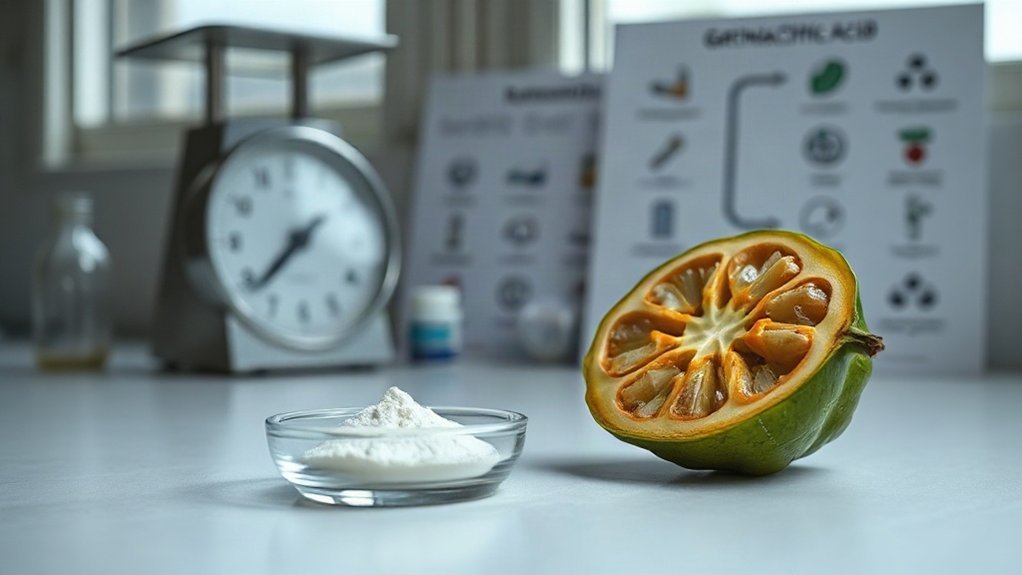
How might HCA affect weight? Garcinia cambogia rind contains hydroxycitric acid (HCA), which researchers have proposed could interfere with fat production. HCA may inhibit ATP citrate lyase, an enzyme involved in converting carbohydrates into fat. Laboratory studies have observed this effect, but I wouldn’t treat it as proof that HCA blocks fat formation in the human body. That mechanism hasn’t been established in people.
Researchers have also suggested that HCA could influence serotonin availability. Because serotonin may affect appetite, this has prompted claims of appetite suppression. However, the proposed link remains uncertain, and I can’t assume it meaningfully reduces hunger or food intake.
Other proposed actions involve inhibiting pancreatic alpha-amylase and intestinal alpha-glucosidase, enzymes that help digest carbohydrates. These ideas offer possible explanations, not demonstrated weight-loss effects. Mechanisms seen in lab settings don’t necessarily translate into results for people. Overall, HCA’s proposed actions remain unconfirmed as a reliable way to produce weight loss. Like other products marketed for weight loss, detox teas may also promise more than the evidence supports.
Why Do Garcinia Claims Outrun the Evidence?
Why do Garcinia claims sound so certain when the evidence is not? Marketing often presents hydroxycitric acid (HCA) as a proven way to block fat production and curb appetite. But those proposed effects haven’t been established in humans. I’d treat confident promises of effortless weight loss as claims, not conclusions.
A systematic review of 12 randomized controlled trials, involving 706 people, found an average advantage of just 0.88 kg over placebo. The result was borderline, and its clinical importance is unclear. More tellingly, removing three unusually favorable small studies erased statistical significance; the largest, most rigorous trial found no significant difference.
I also wouldn’t mistake a pooled number for strong proof. The trials were small, lasted only 2–12 weeks, and had methodological weaknesses, including unclear allocation concealment. These limitations leave room for bias and uncertainty. Celebrity endorsements and repeated claims about appetite and fat burning can make the garcinia truth seem settled. It isn’t: the evidence remains limited and inconsistent. The same caution applies when comparing products in slimming tea rankings, where ingredient labels and prices don’t establish weight-loss benefits.
What Are Garcinia Cambogia’s Main Risks?
Although serious liver injury appears rare, Garcinia cambogia has been linked to acute liver failure, including a reported case requiring a transplant after 15 days of use. I wouldn’t treat that case as proof that the supplement caused the damage, but it’s a serious safety signal. Researchers call drug- or supplement-related liver damage hepatotoxicity, and multi-ingredient products can make the cause harder to identify. One reported fatal liver-failure case involved two supplements, one containing Garcinia, alongside asthma medication.
More common garcinia side effects include headache, dizziness, dry mouth, nausea, and stomach upset or diarrhea. Potential interactions have also been raised with diabetes medicines, antidepressants and other serotonin-affecting drugs, warfarin, statins, and some asthma medicines. The evidence for these interactions varies, so I’d ask a healthcare professional before combining Garcinia with medicines. Slimming tea ingredients may also interact with medications, so check their labels before using them alongside prescription drugs. I’d avoid it during pregnancy or breastfeeding, and seek medical advice first if you have liver problems or diabetes. Stop taking it and seek prompt care if you notice possible signs of liver injury.
Who Should Avoid Garcinia Cambogia?
If you’re pregnant or breastfeeding, have liver problems, or take medicines that may interact with garcinia cambogia, avoid it or check with a clinician first. I’d be especially cautious if you have a history of liver disease: rare reports link garcinia-containing products to severe injury, including liver failure. LiverTox also discusses liver-injury concerns associated with these products, though reports can’t prove that garcinia caused every case.
If you have diabetes, ask your clinician before using it. Blood-sugar effects are inconsistent, and diabetes medicines may interact. I’d also seek advice before combining it with antidepressants or other serotonin-affecting drugs, pain medicines, warfarin, statins, or montelukast. Evidence for these interactions is limited, but a possible serious adverse event isn’t worth dismissing.
Check the full label, too. Some weight-loss supplements have contained undeclared drugs such as sibutramine, so risks may come from adulteration, not just the named ingredient. If you develop concerning symptoms, stop taking the product and seek medical care. Like other slimming products, All Day Slimming Tea may contain ingredients with their own risks and interactions.
Can Garcinia Affect Medicines or Blood Sugar?
Garcinia may affect blood sugar, but human studies don’t show a consistent effect: most found no change, while one small study reported increases after eight weeks. In 35 adults, fasting blood sugar rose 4.1% and HbA1c rose 3.4% after eight weeks of extract. A small crossover clinical trial found hydroxycitric acid lowered the blood-sugar response in healthy participants, but not in participants with diabetes. These mixed results don’t establish a reliable benefit or harm.
If you have diabetes, Garcinia could complicate treatment, especially alongside insulin or other diabetes medicines. I’d ask a healthcare professional before trying it rather than assume it’s harmless. Reports also suggest possible interactions with serotonin-affecting antidepressants or pain medicines, warfarin, and montelukast. Evidence remains limited, and some reports involved multi-ingredient supplements, so the specific cause isn’t always clear.
Concentrated green tea extract has also been linked to liver damage, with dosage a potential concern. Because products vary, check the label and seek medical advice before combining Garcinia with medicines or other supplements. The supplement industry’s claims shouldn’t replace individualized guidance.
How Can You Check Garcinia Supplement Claims?
I’d look for well-designed human trials, not lab studies or bold promises; Garcinia’s pooled weight-loss benefit was small and uncertain. I’d also check the label for the HCA dose and other ingredients, since supplement contents can differ from what’s listed. Claims of rapid fat burning or appetite control should raise questions when reliable human evidence is missing.
Check Clinical Evidence
To check garcinia supplement claims, I look for randomized, double-blind, placebo-controlled human trials that measure weight loss—not just lab mechanisms, animal results, or testimonials. In a garcinia cambogia review, I’d also check how many people participated and how long researchers followed them. A 2011 review pooled nine trials with usable data from 706 participants; studies lasted only two to 12 weeks.
The pooled estimate suggested hydroxycitric acid reduced body weight by just 0.88 kg versus placebo. Its 95% confidence interval ranged from 0.00 to 1.75 kg, and the result barely reached statistical significance (P = .05). That doesn’t establish meaningful weight loss. The apparent benefit disappeared when researchers excluded three outlying studies or examined more rigorous trials. All trials had methodological weaknesses, and none explained how blinding worked. I wouldn’t treat these findings as proof.
Verify Ingredient Doses
When checking a Garcinia label, look for the amount of hydroxycitric acid (HCA) per serving—not just the extract amount—and compare it with the serving directions. Check how many servings you’d need to reach the product’s stated daily dose. Guidance often cites 900–1,500 mg of HCA daily, but researchers haven’t established an ideal dose.
Some labels recommend extracts containing at least 50% HCA. I wouldn’t treat that percentage as proof: it doesn’t confirm the actual HCA amount. Garcinia, also called malabar tamarind, is sold in many forms, and testing has found supplements with more or less ingredient than their labels claim. Look for independent quality testing and a reputable manufacturer. Read the full ingredient list, too; a fat burning supplement may combine Garcinia with other substances, and adulteration can make the contents differ from the label.
Watch for Red Flags
Because Garcinia’s weight-loss evidence is limited, be wary of claims promising rapid, effortless, or guaranteed results. I’d check whether a supplement’s claims match reliable human research, not testimonials or isolated favorable studies. A review of 12 trials found only a 0.88 kg average advantage over placebo, with borderline significance; a prominent 12-week trial found no significant benefit.
| Claim | What I’d check | Red flag |
|---|---|---|
| Appetite suppressant | Human trial results | Mechanism presented as proven |
| Fat oxidation | Meaningful weight outcomes | Lab theory sold as fat loss |
| Prevents weight regain | Long-term follow-up | Guarantee without evidence |
“Clinically proven” deserves scrutiny: trials lasted 2–12 weeks, varied in dose, and had weaknesses. Pooled results lost significance when small favorable trials or less rigorous studies were excluded. I’d read the full ingredient list and ask a healthcare professional before use, especially if I take medicines; Garcinia products have been linked to serious liver injury.
What Are Safer Alternatives for Weight Management?
Rather than relying on Garcinia cambogia, build weight management around sustainable habits: eat a balanced, high-fiber diet, stay active, get enough sleep, and manage stress. I’d favor these steady changes over quick fixes, such as exercising about 30 minutes a day and choosing nutritious foods you can maintain.
If you need more support, talk with a healthcare professional about evidence-based options that fit your health needs and medications. They can assess your situation, including whether body mass index is useful in guiding care, rather than treating a number as a complete picture of health.
I wouldn’t assume a supplement is safe because it’s sold as “natural.” The NCCIH and NIH Office of Dietary Supplements provide information on supplement evidence and safety, but Garcinia products still have uncertain benefits, variable ingredients, and reports of serious liver injury. Ask a clinician or pharmacist before starting a supplement or weight-loss treatment, especially if you have a medical condition, take medication, or are pregnant or breastfeeding.
Frequently Asked Questions
Does Garcinia Cambogia Actually Help You Lose Weight?
Garcinia cambogia probably doesn’t help you lose meaningful or lasting weight. I’d treat claims that it melts fat with skepticism: a review of nine trials found only about 1.9 pounds more weight loss than placebo, with borderline statistical significance and substantial variation. When researchers removed three small, favorable studies, the apparent benefit disappeared. The largest, most rigorous trial found no significant difference, and pooled evidence showed no significant BMI improvement.
What Is the Japanese Trick to Losing Weight?
I can’t point you to a proven “Japanese trick” for losing weight. A small Japanese trial tested garcinia cambogia’s active ingredient, HCA, but found no significant difference in weight or BMI after 12 weeks. Broader research suggests HCA may offer, at most, a small and uncertain benefit—not a special diet or reliable shortcut. I’d focus instead on sustainable eating habits, regular activity, sleep, and advice from a qualified health professional.
What Is the Most Proven Weight Loss Product?
I’d put orlistat among the best-supported weight-loss products; it’s no magic bullet, like a tool that works only with the right plan. A meta-analysis of 16 studies involving over 10,000 people found about 2.9 kg more weight loss than placebo. That’s meaningful but modest, and side effects matter. I’d discuss orlistat with a healthcare professional, especially if you take medicines. No product replaces lasting changes to eating habits and activity.
Is Garcinia Cambogia Better Than Berberine?
I can’t say Garcinia cambogia is better than berberine: the evidence provided doesn’t offer reliable head-to-head trials. In 12 randomized trials involving 706 people, Garcinia produced only a borderline average advantage of 0.88 kg over placebo. That result disappeared in analyses excluding outliers or focusing on stronger studies, and the largest rigorous trial found no significant benefit. Without comparable berberine data, I can’t rank them; I’d treat Garcinia’s weight-loss benefit as uncertain.
Conclusion
In reviewing garcinia cambogia, I found a familiar coincidence: the louder the weight-loss promises, the less certain the evidence. Studies don’t establish meaningful, reliable results, and reports of possible liver injury make caution sensible. If a product such as All Day Slimming Tea lists garcinia, that alone doesn’t show it works—or that it’s safe for you. I’d check the full ingredient list, discuss risks with a clinician, and favor sustainable habits over dramatic claims.
References
Garcinia Cambogia, https://www.nccih.nih.gov/health/garcinia-cambogia
Garcinia Cambogia, https://ods.od.nih.gov/factsheets/WeightLoss-HealthProfessional/
Garcinia Cambogia: A Systematic Review and Meta-Analysis of Randomized Controlled Trials, https://pubmed.ncbi.nlm.nih.gov/24615307/