Why You’re Bloated After Every Meal (and 8 Fixes That Actually Work)

If you’re bloated after every meal, I know how uncomfortable and frustrating that can feel. Common causes include large portions, eating quickly, swallowed air, constipation, food intolerances, and fermentable foods. I’d start by slowing down, reducing fizzy drinks, and tracking meals and symptoms for two weeks. Increase fiber gradually, drink water consistently, and try a gentle post-meal walk. Persistent or worsening bloating deserves medical advice. Below, I’ll explain practical fixes and signs that shouldn’t be ignored.
Key Takeaways
- Large meals, eating quickly, swallowed air, fizzy drinks, and fermentable foods can cause bloating after meals.
- Track meals, portions, symptoms, bowel changes, and eating habits for at least two weeks to spot recurring patterns.
- Try smaller meals, slower eating, thorough chewing, and avoiding gum, straws, and carbonated drinks.
- Adjust fiber gradually, drink water consistently, and take a gentle 10–15-minute walk after meals.
- Seek medical advice if bloating persists, worsens, disrupts daily life, or comes with concerning symptoms.
What Causes Bloating After Every Meal?
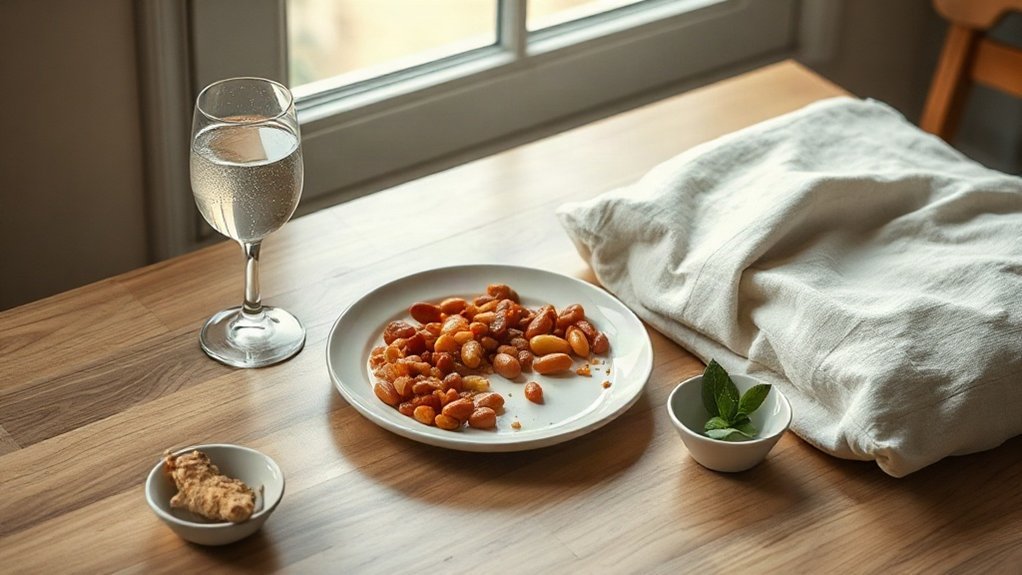
Bloating after every meal can feel frustrating, but it often has a manageable cause. When you wonder, “why am i bloated,” I’d start by looking at meal size, food choices, and timing. Large meals can stretch your stomach, while eating quickly may increase swallowed air.
Bloating after meals may stem from large portions, certain foods, or eating quickly.
Some foods ferment in the gut and produce gas. Beans, lentils, onions, broccoli, and certain artificial sweeteners can be triggers; adding fiber suddenly may also worsen symptoms. Lactose intolerance can cause bloating within 30 minutes to two hours after dairy, while celiac disease or other food sensitivities may play a role.
Digestive conditions matter, too. Irritable bowel syndrome, constipation, small intestinal bacterial overgrowth, and delayed stomach emptying can affect gut movement or fermentation. Carbonated drinks, hormonal shifts, and fluid retention may contribute as well. Gentle teas without laxative ingredients may offer digestive support without causing severe cramps or diarrhea.
I’d track meals and symptoms for a short time, changing one suspected trigger at a time. Persistent or severe symptoms deserve a clinician’s assessment.
Eat Slowly to Reduce Swallowed Air
When you rush through a meal, you may swallow extra air that adds gas to your digestive tract. If you’re bloated after eating, try slowing your eating speed; this simple change may help. I suggest taking smaller bites and chewing each one thoroughly. Aim for about 20–30 chews per bite, but don’t worry about counting perfectly.
| Try this | How it helps |
|---|---|
| Take smaller bites | Makes thorough chewing easier |
| Pause between bites | Keeps your pace unhurried |
| Put utensils down | Creates a natural pause |
Choose a calm, distraction-free place to eat, so you can notice your pace and your body’s signals. Fullness can take about 20 minutes to register, so stop when you feel satisfied rather than pushing past comfort. You don’t need to change every habit at once: start by pausing between bites at your next meal. If bloating persists despite practical adjustments, consider discussing it with a healthcare professional.
Avoid Gum, Straws, and Fizzy Drinks
Gum, hard candy, straws, and fizzy drinks can all increase the air or gas in your digestive tract, which may leave you feeling more bloated after a meal. If you’re already dealing with bloating and gas, these small habits are practical places to start—not proof that you’re doing anything wrong.
I’d try a simple two-week experiment:
- Skip gum and hard candy; chewing or sucking can lead you to swallow extra air.
- Drink from a cup instead of a straw, which may also increase swallowed air.
- Replace each carbonated drink with a still option; carbon dioxide can collect in your stomach and add to bloating.
Keep a brief food diary and note whether your symptoms change. This can help you see whether these adjustments matter for you, rather than guessing about how to stop bloating. If symptoms persist despite the trial, or become painful, talk with a healthcare provider. You deserve support, not pressure to dismiss ongoing discomfort.
Check for Bloating Triggers in Your Diet
I suggest keeping a food-and-symptom diary for at least two weeks to spot patterns without cutting foods at random. Common triggers include dairy, wheat, beans, onions, garlic, some vegetables, fizzy drinks, and sugar-free sweets. Try changing one suspected trigger at a time—and note how you prepare foods—so you can tell what may be affecting you.
Track Meals And Symptoms
If bloating follows nearly every meal, a two-week food-and-symptom diary can help you spot patterns without cutting out foods unnecessarily. I’d record meals, timing, symptoms, and bowel changes, including how soon discomfort starts. That detail can guide a useful conversation with your healthcare provider, especially if constant bloating persists or worsens.
- Note whether symptoms begin soon after eating. Dairy-related discomfort may appear within 30 minutes to two hours; SIBO symptoms can arise within one to two hours after meals.
- Look for repeated associations, not one-off reactions. I wouldn’t assume a single food is responsible based on one uncomfortable meal.
- Test only one suspected trigger at a time. If you’re considering a low fodmap diet, ask a dietitian or healthcare professional for guidance; it’s meant to be temporary.
Take your diary to an appointment.
Spot Common Trigger Foods
Your two-week diary can help reveal whether certain foods repeatedly trigger bloating. I’d look for patterns after dairy, wheat, beans or lentils, onions or garlic, and cruciferous vegetables such as broccoli, cabbage, and Brussels sprouts. These foods don’t affect everyone the same way, and dietary fiber can contribute to gas, especially when your intake changes. Fizzy drinks and sugar-free gum or candy with sorbitol, xylitol, or mannitol may also cause symptoms.
If dairy seems connected, lactose intolerance could be involved. I’d consider a short lactose-free or dairy-elimination trial and discuss persistent symptoms with a healthcare professional. Don’t assume every meal-related symptom points to one food: timing and repeated patterns matter. If you’re considering a low-FODMAP diet, ask a dietitian or healthcare professional for guidance; it’s meant to be temporary.
Test One Change At A Time
To identify a food trigger, keep a diary for at least two weeks, noting what you eat, when bloating starts, and how long it lasts. I use this record to spot patterns, including postprandial gas or constipation, without assuming one food is responsible.
Then test one suspected trigger at a time. Changing several foods together makes it harder to tell what helps. Consider:
- Pause fizzy drinks or sugar-free gum, then note any symptom changes.
- If dairy seems linked, try avoiding it for two weeks and discuss your findings with a healthcare professional.
- Track possible reactions to beans, lentils, wheat, onions, garlic, broccoli, or sweeteners such as sorbitol.
I wouldn’t start a restrictive low-FODMAP diet alone. It’s usually temporary, and a dietitian or healthcare professional can guide you safely.
Add Fiber Slowly and Drink More Water
If you’re adding fiber, I’d increase it gradually with foods like beans, whole grains, and vegetables, since a sudden change can cause gas. I’d also drink water consistently—about six to eight 8-ounce glasses a day is a general guide—to help keep stools soft and moving. Detox teas may cause temporary changes, but they don’t provide proven lasting weight-loss benefits; temporary effects aren’t the same as meaningful health improvements. If your bloating persists or worsens, I’d check in with a healthcare provider.
Increase Fiber Gradually
When you add more fiber, increase it gradually—beans, whole grains, and vegetables can cause temporary gas as gut bacteria break them down. That doesn’t mean you need to avoid fiber; your gut microbiome may need time to adjust. I’d add one fiber-rich food at a time and note symptoms in a food diary, including abdominal distension, so you can spot patterns.
- Increase portions in small steps instead of changing several meals at once.
- Drink enough water as you raise fiber intake; fluids help move food through your digestive tract and keep stool from becoming hard.
- Aim for a steady, balanced amount: too little may contribute to constipation, while too much—especially insoluble fiber—can worsen gas and bloating.
A digestive tea isn’t a substitute for fluids or gradual changes. If bloating persists or worsens, talk with a healthcare provider.
Choose Fiber-Rich Foods
Fiber-rich foods can support regular bowel movements and help prevent constipation, but a sudden increase may cause more gas and bloating. Beans, whole grains, and vegetables give gut bacteria more carbohydrates to ferment, so adding large portions at once can temporarily worsen symptoms.
I recommend starting with smaller servings and increasing them gradually rather than cutting fiber out. As you add fiber, drink enough water to help food move through your digestive tract and keep stool from becoming hard and compacted. If bloating persists, keep a food diary to spot possible triggers and note how portion sizes affect you.
These practical steps can support bloating relief and are useful stomach bloating remedies. A digestive enzyme isn’t a substitute for gradual changes; if symptoms are severe or ongoing, ask a healthcare professional for guidance.
Drink Water Consistently
Steady hydration can help ease constipation-related bloating by keeping stool softer and supporting its movement through your digestive tract. I’d aim for about six to eight 8-ounce glasses daily, adjusting for your needs and any fluid limits from your healthcare professional. Water won’t debloat fast or treat every cause of bloating, but consistent sipping can support regularity.
- Add fiber-rich foods gradually; a sudden increase may cause gas while gut bacteria break them down.
- Pair each fiber increase with enough water to help stool stay soft and move comfortably.
- Track your fluids, fiber, and symptoms to spot patterns without blaming yourself for every uncomfortable meal.
A bloating relief tea may feel soothing, but it can’t replace hydration or address water retention reliably. If bloating persists or worsens, talk with a healthcare provider.
Move to Help Ease Gas and Bloating
A gentle 10–15-minute walk after a meal may help move trapped gas through your gut. I know bloating can make movement feel unappealing, so keep the pace easy and stop if it worsens your discomfort. Regular activity also supports bowel movements and may help prevent constipation, which can contribute to bloating.
| Try this | When | How |
|---|---|---|
| Easy walk | After meals | Walk gently for 10–15 minutes |
| Stretch | If walking feels uncomfortable | Pull one knee toward your chest, then switch |
| Movement break | During long sitting | Stand and move around regularly |
You don’t need a workout; gentle movement is enough to try. If symptoms persist, don’t assume walking, peppermint tea, or ginger will address the cause. Gastroparesis, a condition that slows stomach emptying, can cause ongoing fullness and bloating, so seek medical advice for persistent symptoms. Stop and get medical guidance if you develop severe or lasting abdominal pain, or if activity makes it worse. I’d choose the option that feels comfortable today and build from there.
Track Meals, Symptoms, and Bowel Changes
If bloating keeps showing up after meals, I’d keep a food-and-symptom diary for at least two weeks. You don’t need to change your diet immediately; first, gather details that may reveal a useful pattern.
- Record what you ate, portion sizes, meal times, and when bloating began, how long it lasted, and how severe it felt.
- Note habits such as eating quickly, chewing gum, or drinking fizzy drinks, plus pain, nausea, or early fullness.
- Track bowel frequency and changes, including constipation, diarrhea, or unusual stools.
I’d also note whether symptoms follow particular foods, such as gluten-containing meals, or happen after most meals. Record stress, too: it may coincide with symptoms, but a diary can’t prove the cause. Don’t assume a food is responsible—or that small intestinal bacterial overgrowth explains your symptoms—based on timing alone. Patterns are clues, not diagnoses. If symptoms persist, worsen, or disrupt daily life, I’d share the diary with a healthcare provider; it can help guide evaluation and identify possible triggers. Evidence for slimming tea ingredients varies, so don’t treat a tea’s claims as a diagnosis or a proven fix for bloating.
When Should You See a Doctor for Bloating?
When should you get medical advice for bloating? If it follows nearly every meal, lasts more than two weeks, worsens, or disrupts daily life, I’d encourage you to book an appointment. You deserve help finding the cause, not just reassurance. Mention any ongoing bowel changes, frequent nausea or vomiting, appetite loss, feeling full quickly, persistent heartburn, or trouble swallowing.
I’d also contact a clinician about severe or persistent abdominal pain, unexplained weight loss, blood or black stools, or yellowing skin or eyes. Seek emergency care for unrelenting severe pain, inability to pass gas or stool, vomiting blood, bloody stools, or a fever above 101°F. Dizziness, a rapid heartbeat, or very dark urine may signal dehydration and needs prompt attention.
Track symptoms and share medicines or supplements you use. A probiotic or senna may affect symptoms; don’t assume either treats the cause. Note whether bloating changes with your menstrual cycle, too. Senna-containing slimming teas can cause stomach cramps and may raise safety concerns.
Frequently Asked Questions
Why Am I Extremely Bloated After Everything I Eat?
I can’t tell the cause from symptoms alone, but extreme bloating after every meal can stem from food intolerance, constipation, IBS, delayed stomach emptying, or SIBO. If it’s persisted for over two weeks, worsens, or disrupts daily life, I’d arrange a medical evaluation. Meanwhile, I’d keep a food diary, eat slowly, try smaller meals, limit fizzy drinks, drink enough water, and take a gentle walk after eating. Seek urgent care for severe pain, blood, fever, or inability to pass stool or gas.
How to Flush Out Bloating Fast?
For quick bloating relief, I’d take a gentle 10–15-minute walk; that short window gives you a practical way to encourage digestion and move trapped gas. I know the pressure can feel miserable, so sip water and try a warm compress or bath. Peppermint tea may ease spasms, but skip it if you have reflux; ginger tea is another option. Simethicone may help—follow its label. Seek care for severe symptoms or persistent bloating.
How to Tell if It’s Belly Fat or Bloating?
I’d compare your abdomen at different times of day. Bloating often makes it feel tight, full, or tender, and it may look larger after meals, then shrink after you pass gas or have a bowel movement. You might also notice pressure, burping, or discomfort. Belly fat usually doesn’t change noticeably within hours; it changes gradually. If enlargement persists or comes with pain, bowel changes, unexplained weight loss, or blood in your stool, contact a clinician.
Does Bloating Mean Poor Gut Health?
Bloating doesn’t automatically mean you have poor gut health. I’d think of it as a symptom, not a diagnosis: normal digestion, constipation, swallowed air, food intolerance, or IBS can all cause it. Gut bacteria also produce gas as they break down carbohydrates. If your bloating passes within hours, it’s often ordinary. But if it persists, worsens, disrupts your life, or comes with severe pain, vomiting, blood in your stool, or unexplained weight loss, contact a healthcare professional.
Conclusion
Bloating after every meal can feel like an unwelcome guest, but you don’t have to guess your way toward relief. I’d start with one small change—slowing down, taking a gentle walk, or keeping a brief symptom diary—and give it time to show a pattern. Avoid drastic diets or laxative teas; they may cause problems without addressing the cause. If symptoms persist, worsen, or come with warning signs, contact a clinician. You deserve answers and care.
References
“Gas in the Digestive Tract,” https://www.niddk.nih.gov/health-information/digestive-diseases/gas-digestive-tract
“Bloating,” https://www.nhs.uk/symptoms/bloating/
“Abdominal Bloating: Causes, Symptoms & Treatment,” https://my.clevelandclinic.org/health/symptoms/21740-abdominal-bloating