Does All Day Slimming Tea Have Caffeine? Morning vs Evening, Answered

I’d treat All Day Slimming Tea’s morning blend as caffeinated because it contains green and oolong tea. The caffeine amount isn’t disclosed, so I can’t reliably compare it with coffee or regular tea. The evening blend lists no tea leaves or other stated caffeine source, but it hasn’t been confirmed caffeine-free. Check the current label, especially if you’re sensitive to caffeine. I’ll also explain what to keep in mind about timing, bedtime use, and the evening blend’s senna.
Key Takeaways
- Morning Energy Tea contains caffeine-bearing green and oolong tea, but its caffeine amount per serving is not disclosed.
- The listed 2 g serving brewed in 8 fl oz of water does not reveal how much caffeine it provides.
- Evening Detox Tea lists no tea leaves or other stated caffeine source, but it is not confirmed caffeine-free.
- Morning tea may be better earlier in the day if caffeine affects your sleep; the package gives no specific timing advice.
- Evening tea contains senna, which may cause cramps or bowel movements; check the label and ask a healthcare professional about regular use.
Does All Day Slimming Tea Have Caffeine?
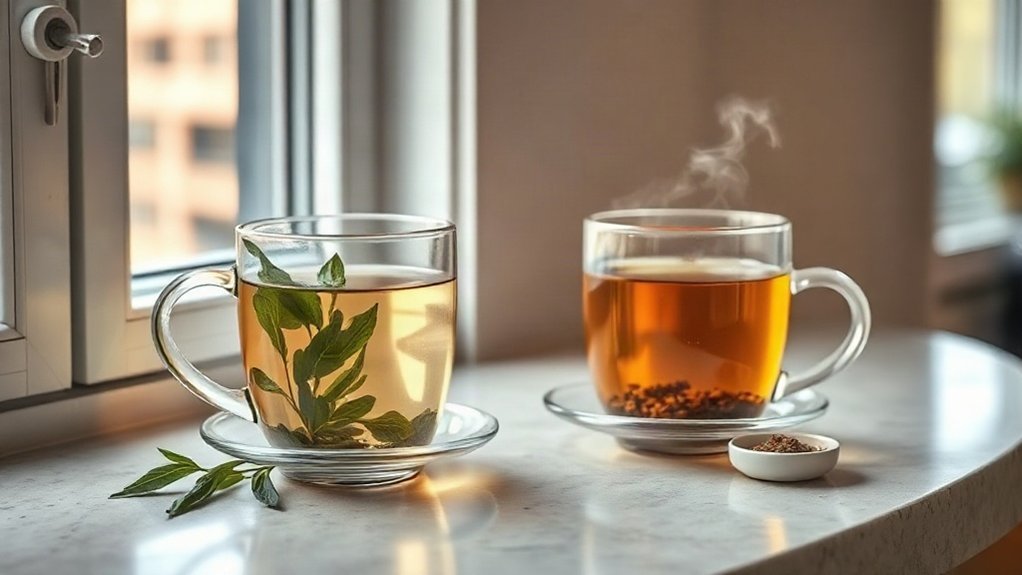
Yes—All Day Slimming Tea contains caffeine in its Morning Energy Tea, which includes naturally caffeinated green and oolong tea. So, if you’re asking, “does all day slimming tea have caffeine,” the answer depends on which blend you drink: the morning blend does, while the Evening Detox Tea is a different herbal blend with no conventional caffeinated tea base listed.
The product information doesn’t state how much caffeine a serving contains. I can’t reliably compare its caffeine with coffee or ordinary tea, and the amount may matter if you’re sensitive to stimulants or need to limit your intake. Green tea caffeine and oolong tea caffeine contribute to the morning blend’s caffeine, but the available details don’t establish the total amount.
The Morning Energy Tea also contains ginseng and a 2,000 mg proprietary blend, though the available information doesn’t specify what that blend may realistically provide.
Check the current package label before brewing, especially if you monitor caffeine for health reasons. Don’t assume both teas have the same ingredients or caffeine profile: review each blend separately and ask a healthcare professional if you’re unsure whether caffeine is appropriate for you.
How Much Caffeine Is in the Morning Blend?
How much caffeine does the Morning Energy Tea provide? I can’t give you an exact amount: the label doesn’t disclose the caffeine in a serving. It lists green tea and oolong tea, both naturally caffeinated, so the blend does contain caffeine, but the total remains unknown.
Here’s what the serving information tells you:
- One serving is 2 g of tea.
- The directions call for brewing it in 8 fl oz of water.
- The label doesn’t state how much caffeine that serving contains.
- The blend also includes ginger, ginseng, and garcinia cambogia, but their individual amounts aren’t disclosed.
Without a measured value, I can’t reliably compare this slimming tea caffeine content with a cup of coffee or regular tea. Brewing details alone don’t establish the amount; tea type and preparation can affect caffeine levels. If you’re monitoring your intake, treat the morning blend as caffeinated and ask the manufacturer for a tested figure before relying on a specific estimate. Since caffeine can affect sleep quality, consider avoiding caffeinated tea close to bedtime.
Is Evening Detox Tea Caffeine-Free?
I find that Evening Detox Tea is presented as a caffeine-free herbal blend, with ingredients such as senna, licorice, peppermint, and fennel. However, the available ingredient details don’t confirm its caffeine content per serving, so check the current label. Its evening timing may suit a bedtime routine, but caffeine-free status alone doesn’t establish that it’ll support sleep. Senna may stimulate digestion overnight, and some people may need to avoid it.
Caffeine-Free Formula
The Evening Detox Tea appears to be a caffeine-free herbal blend because its listed ingredients don’t include green or oolong tea, the caffeine-containing teas in the Morning Energy formula. However, the available label doesn’t explicitly certify the blend as caffeine-free or report a caffeine test result. I’d treat “caffeine-free” as a reasonable inference, not a verified guarantee.
- Green and oolong teas aren’t listed in the evening blend.
- The label doesn’t state a caffeine amount.
- It doesn’t identify *Camellia sinensis*, the tea plant that supplies caffeine in conventional tea.
- Each serving uses 2 g of blend, but ingredient amounts aren’t disclosed.
If you’re comparing a caffeine free slimming tea for evening use, check with the seller about testing or confirmation, especially if you avoid caffeine strictly. The ingredient list alone can’t rule out trace caffeine or contamination.
Evening Tea Ingredients
Although Evening Detox Tea’s ingredient list contains no tea leaves or other stated caffeine source, it doesn’t report a measured caffeine amount, so I can’t confirm the brewed tea is caffeine-free.
The evening detox tea lists senna, licorice, peppermint, fennel, cinnamon, ginger, orange peel, dandelion, lemongrass, monk fruit, and flavorings. That makes it an herbal infusion, not a conventional tea-leaf blend. Each serving uses 2 g brewed in 8 fl oz of water, but the company doesn’t disclose individual ingredient amounts.
| Question | What I found | What remains unknown |
|---|---|---|
| Tea leaves? | None listed | Possible trace caffeine |
| Serving | 2 g in 8 fl oz | Measured caffeine |
| Senna | Stimulant laxative | Individual dose |
If you’re asking how much caffeine in detox tea, the label doesn’t give a figure. Senna supports short-term constipation relief, not fat loss; don’t use it over a week without medical advice.
Sleep-Friendly Timing
At bedtime, Evening Detox Tea appears to be the caffeine-free option: its listed ingredients include no tea leaves, unlike the caffeinated green and oolong teas in Morning Energy Tea. However, the available information doesn’t explicitly confirm zero caffeine, so I’d check the current package label before relying on it as a decaf slimming tea.
For caffeine and sleep, timing matters, but caffeine isn’t the only consideration. Evening Detox Tea contains senna, a stimulant laxative; the product name doesn’t prove it improves sleep. Its ingredient amounts are undisclosed, too. I’d use this tea caffeine guide:
- Check the label for caffeine content.
- Don’t assume “evening” means sleep-friendly.
- Consider senna’s laxative effects before bedtime.
- Ask a clinician if you’re pregnant, breastfeeding, or managing a health condition.
The morning blend’s caffeine amount isn’t disclosed either.
When Should You Drink Morning Energy Tea?
Morning Energy Tea contains naturally caffeinated green and oolong tea, so I’d drink it earlier in the day if caffeine affects your sleep. The package doesn’t give an exact caffeine amount or recommend a specific time, so I can’t promise how it’ll affect you. If you have caffeine sensitivity, start cautiously and follow the current package’s brewing directions.
| Moment | What I’d consider | Possible feeling |
|---|---|---|
| Early morning | Try one prepared serving | More alert |
| With breakfast | Check how caffeine feels | Reassured |
| Late morning | Consider your usual intake | Steady |
| Afternoon | Remember caffeine half-life | Concerned about sleep |
The serving is listed as 2 g brewed in 8 fl oz of water, but its caffeine content remains undisclosed. Caffeine half-life varies, so its effects may linger for hours; timing alone can’t guarantee restful sleep. I’d avoid assuming the tea is low-caffeine or that it must be taken before or after meals. Follow the current label, and ask a healthcare professional if caffeine could affect a health condition or medication.
Is Evening Detox Tea Safe Before Bed?
I find Evening Detox Tea is caffeine-free, but that doesn’t guarantee it’ll be comfortable before bed. Its senna may trigger cramps or bowel movements that disrupt sleep, and it’s intended for short-term constipation relief—not nightly detox or fat loss. Regular use may affect bowel function and hydration. I’d check the package directions and ask a healthcare professional before using it if you’re pregnant, nursing, have a health condition, or take medication.
Caffeine-Free Formula
Although the Evening Detox Tea is an herbal blend, don’t assume it’s caffeine-free: the available ingredient information doesn’t state its caffeine content, so check the current package label.
I wouldn’t treat “herbal” as proof of zero caffeine or compare it with decaf tea without confirmation. The 70 mg figure sometimes discussed for all day slimming tea refers to an estimate for the morning blend, not a verified amount for this evening formula.
Before drinking it near bedtime, consider these points:
- Check the package for caffeine information and serving directions.
- Remember, senna is a short-term constipation remedy, not a fat-loss or detox ingredient; don’t use it longer than a week without medical advice.
- Licorice may affect blood pressure and potassium, especially with substantial or prolonged use.
- Ask a healthcare professional if you’re pregnant, nursing, taking medication, have health conditions, or feel unsure.
Caffeine isn’t the only bedtime safety consideration.
Senna’s Bedtime Effects
Because Evening Detox Tea contains senna, it may prompt a bowel movement at an inconvenient time, though the available information doesn’t say how quickly this tea acts. I’d consider that possibility before drinking slimming tea at night, especially if bathroom trips could interrupt your sleep. Senna is a stimulant laxative used for short-term constipation relief; it doesn’t burn fat or detoxify the body. Its bedtime effects may include disrupted sleep, but the evidence provided doesn’t establish that senna directly causes insomnia.
The label doesn’t disclose the senna dose, so I can’t estimate how strong its effects might be. MedlinePlus advises against using senna for more than one week without speaking to a doctor, so I wouldn’t assume nightly, long-term use is safe. The blend also contains licorice root, which may affect blood pressure and potassium balance with substantial or prolonged exposure.
Who Should Avoid It
If you’re considering Evening Detox Tea before bed, don’t assume it’s safe for nightly or long-term use: it contains senna, a stimulant laxative meant for short-term constipation relief, and its dose isn’t disclosed.
I’d avoid it or ask a healthcare professional first if you:
- Are pregnant or nursing; licorice root also warrants caution during pregnancy.
- Have cardiovascular, kidney, or digestive conditions, since senna may cause bowel effects and licorice can affect blood pressure and potassium.
- Take medications that could interact, including some that affect potassium or blood pressure.
- Have questions about package warnings or repeated use; MedlinePlus advises consulting a doctor before using senna beyond one week.
The evening blend is caffeine-free, so the pregnancy caffeine limit and caffeine-related anxiety aren’t the main concerns. Senna promotes bowel movements; it hasn’t been shown to burn fat or remove toxins.
How Does Morning Tea Compare With Coffee?
How does All Day Slimming Tea’s morning blend compare with coffee? Both can provide caffeine: the Morning Energy Tea contains green tea and oolong tea, which naturally contain this stimulant. However, the label doesn’t state how much caffeine one serving provides, so I can’t reliably compare it with a particular cup of coffee or predict how energizing it’ll feel.
The documented serving is 2 g brewed in 8 fl oz of water. That measurement tells you how to prepare the tea, not its caffeine content. The blend also lists ginger, ginseng, and garcinia cambogia, but their amounts aren’t disclosed; these ingredients don’t let me estimate caffeine either. Green and oolong tea can differ in caffeine levels, but the amount varies with the tea and how it’s brewed.
If you’re comparing drinks, check the current package label and consider your total caffeine from tea, coffee, and other sources. The FDA cites 400 mg daily as a level not generally associated with negative effects for most adults, but individual responses vary. I wouldn’t assume this tea is lower in caffeine than coffee without a disclosed amount.
Who Should Be Cautious With These Teas?
People who are sensitive to stimulants or limiting caffeine should take care with Morning Energy Tea: it contains green and oolong tea, but the caffeine amount per serving isn’t disclosed. I can’t predict your caffeine tolerance from the ingredient list, so consider your own response and avoid assuming the morning blend is mild. Caffeine may cause palpitations or increase sleep latency, especially if you’re sensitive or drink it later in the day.
> Morning Energy Tea contains caffeine, but the amount per serving isn’t disclosed; consider your sensitivity and avoid assuming it’s mild.
I’d also be cautious in these situations:
- If you have a cardiovascular, kidney, or digestive condition, ask a healthcare professional whether either formula suits you.
- If you take medication, check for possible interactions with caffeine or herbal ingredients before use. Some combinations may require medical advice.
- The Evening Tea contains senna, a stimulant laxative for short-term constipation relief; MedlinePlus advises speaking with a doctor before using it beyond one week.
- If you’re concerned about blood pressure or potassium, ask about the Evening blend’s licorice root, particularly with substantial or prolonged exposure.
These cautions don’t mean everyone will experience harm, but individual advice matters.
Where Can You Check the Caffeine Label?
To check the caffeine information, read the ingredient panel and preparation directions on the package you plan to buy, since labels may vary. Look for green tea or oolong tea: both appear in Morning Energy Tea and naturally contain caffeine. The available product information doesn’t state how much caffeine a prepared serving provides, so I can’t tell you precisely how it compares with coffee or another tea.
Check the Evening Detox Tea’s label separately. It has a different herbal profile, but the available information doesn’t confirm its caffeine amount. Don’t assume that “evening” or “detox” means caffeine-free; verify the package or ask the seller if the label is unclear.
You may see terms such as theobromine or l-theanine in discussions of tea compounds, but they don’t tell you the product’s caffeine dose. Caffeine can affect adenosine signaling, yet the label—not general ingredient explanations—is the practical place to check. Compare the exact package you’ll use with any researched formula before deciding when to drink it. Reviewing ingredient risks and possible side effects can also help you decide whether the tea is suitable for you.
Frequently Asked Questions
What Is the Best Time to Drink Slimming Tea?
I’d drink slimming tea according to its ingredients, not a promise of extra fat loss. For All Day Slimming Tea, I’d have the caffeinated Morning blend earlier in the day, ideally after breakfast or lunch, and avoid it late if caffeine affects your sleep. I wouldn’t use the senna-containing Evening blend as a weight-loss aid; senna is a laxative. Follow the label, and ask a healthcare professional if you have concerns.
Does All Day Slimming Tea Really Work?
All Day Slimming Tea may offer a warm daily ritual, but I wouldn’t count on it for meaningful weight loss. Green tea and caffeine may have small, uncertain effects, while evidence for garcinia is inconsistent. The evening tea’s senna can trigger bowel movements, not burn fat or detoxify your body. Because ingredient doses aren’t disclosed and the finished product lacks published clinical trials, I’d treat slimming claims cautiously and check with a healthcare professional before use.
Which Tea Burns the Most Belly Fat?
No tea specifically burns belly fat; you can’t target fat loss in one area. Among common teas, green tea has the strongest research, but its effects on metabolism and fat oxidation appear small and uncertain—not a dependable way to lose weight. Oolong tea has limited short-term research, too. I’d choose unsweetened tea if you enjoy it, especially instead of a high-calorie drink, and focus on sustainable eating and activity for overall weight loss.
Is It Safe to Drink Slimming Tea Every Day?
I wouldn’t treat slimming tea as a harmless daily ritual; the label can hide sharp edges. All Day Slimming Tea’s Evening blend contains senna, a stimulant laxative that can cause cramps, diarrhea, and, with prolonged use, dependence or electrolyte loss. MedlinePlus advises against using senna longer than a week without medical guidance. The Morning blend contains caffeine, but its amount isn’t disclosed. Ask your clinician before use if pregnant, nursing, managing health conditions, or taking medication.
Conclusion
My takeaway: All Day Slimming Tea’s morning blend contains caffeine from green and oolong tea, but the brand doesn’t state how much; its evening blend is marketed as caffeine-free. Don’t treat an online estimate as a measured dose, or senna’s laxative effect as fat loss. Check the package, consider your caffeine sensitivity and health needs, and ask a clinician if unsure. A tea bag isn’t a magic weight-loss engine—or a reason to let your sleep run on caffeine fumes.
References
Caffeine in the Diet, https://www.fda.gov/food/food-additives-petitions/caffeine-information-consumers
Caffeine, https://www.nccih.nih.gov/health/caffeine
Green Tea, https://www.nccih.nih.gov/health/green-tea