Morning Energy Tea: Caffeine, Ginseng and What That 2,000 Mg Blend Really Delivers
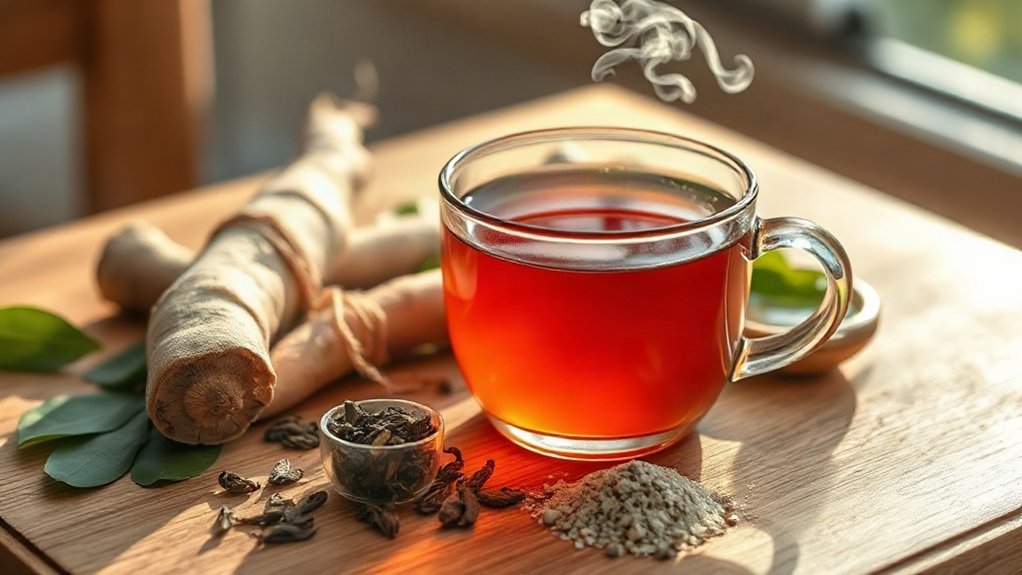
I can’t confirm Morning Energy Tea’s caffeine amount because its label doesn’t disclose one. Its green and oolong teas naturally contain caffeine, but brewing and serving size affect how much reaches your cup. The 2,000 mg figure belongs to a separate Korean red ginseng extract pack in a mocktail recipe; it isn’t the tea’s caffeine or total blend amount, nor proof of a particular benefit. I’ll explain what the ingredients and available evidence can—and can’t—tell you.
Key Takeaways
- Morning Energy Tea blends green and oolong tea, but its caffeine content is not published; check the package or ask the manufacturer.
- Its 2,000 mg proprietary blend includes tea and other ingredients, but individual ingredient amounts are undisclosed.
- The mocktail’s 2,000 mg refers to one pack of Korean red ginseng extract—not the finished drink, caffeine, or a proven effective dose.
- Green tea caffeine and catechins may modestly affect energy expenditure, but neither the tea nor mocktail is proven to cause weight loss.
- Count caffeine from all sources; most healthy adults should stay below 400 mg daily, while pregnancy guidance recommends no more than 200 mg.
How Much Caffeine Is in Morning Energy Tea?

How much caffeine is in Morning Energy Tea? I can’t confirm a specific amount: the product information doesn’t publish its caffeine content. Although morning energy tea is described as a green- and oolong-tea blend, the 2,000 mg figure refers to the blend, not to caffeine. Green and oolong teas naturally contain caffeine, but the amount in a cup depends on the tea leaves, serving size, and steeping time.
For context, an 8-ounce cup of brewed black tea typically provides about 40–70 mg of caffeine, while AriZona Green Tea has about 8–10 mg per 12-ounce serving. Those figures don’t establish how much caffeine this product contains; recipes and processing differ. I’d check the package or ask the manufacturer for a verified amount, especially if you’re pregnant, sensitive to caffeine, or limiting your intake. Ginseng isn’t caffeine, so its presence in a blend doesn’t tell you how much caffeine you’ll consume. As with other morning tea blends, caffeine may affect energy and sleep differently from an evening formula.
What Does Its 2,000 Mg Blend Mean?
The 2,000 mg refers to the amount of Korean red ginseng in one pack of JungKwanJang Korean Red Ginseng Extract Everytime—not the weight of the finished drink. I’d distinguish this measured serving from a 2000 mg proprietary blend, which may describe a combined ingredient amount and can leave individual quantities unclear.
In this recipe, you mix one pack with 1¼ cups of Nixie Ginger Lime Sparkling Water and one tablespoon of fresh-squeezed orange juice. The drink’s final volume and weight consequently exceed the ginseng amount. The figure also doesn’t tell me how much active ginsenosides the pack contains; that depends on the extract’s standardization, which the supplied information doesn’t specify.
The product is described as a natural way to support energy and immunity and as suitable for intermediate ginseng enthusiasts. Those are positioning claims, not proof of a guaranteed effect. I’d treat 2,000 mg as a serving quantity, not a measure of clinical benefit or a reason to expect a particular response from ginseng root. Unlike a measured serving, a proprietary blend lists a combined amount without revealing how much of each ingredient it contains.
What Ingredients Are in Morning Energy Tea?
I find that Morning Energy Tea lists green tea, oolong tea, orange peel, lemongrass, ginger root, dandelion leaf, ginseng, and garcinia cambogia in its 2,000 mg proprietary blend, but it doesn’t disclose each ingredient’s dose. The blend also includes monk fruit and natural lemon and mint flavour, while green and oolong tea provide caffeine. I’d treat the ingredient list as a starting point: without individual amounts or published caffeine content, it’s hard to assess the dose of each component. As with other slimming teas, weight-loss claims should be weighed against the scientific evidence for the ingredients.
Proprietary Blend Ingredients
What does “2,000 mg” actually describe? I’d read the label carefully: here, it refers to one pack of JungKwanJang Korean Red Ginseng Extract Everytime, not a proprietary blend of several ingredients. That distinction matters when you’re comparing products or estimating what a serving provides.
| Label detail | What it means | What remains unknown |
|---|---|---|
| 2,000 mg | Ginseng extract per pack | Specific ginseng compounds |
| Mocktail mix | 1¼ cups sparkling water, 1 tbsp orange juice | Active ingredient amounts |
| Garnish | Dried orange | Caffeine content |
The supplied information says the blend is intended to support energy and immunity, but it doesn’t establish those effects. I can’t infer caffeine content or equate this extract with ginseng tea or green tea extract. Check the product label for further details; the recipe alone doesn’t disclose them.
Tea And Botanical Components
In this mocktail, the botanical component is one 2,000 mg pack of JungKwanJang Korean Red Ginseng Extract Everytime, mixed with ginger-lime sparkling water and fresh orange juice. I’d distinguish this recipe from a conventional energy boosting tea: it contains no listed tea leaves, including green tea, and the supplied information doesn’t state its caffeine content. The ginseng extract is presented as a natural way to support energy and immunity, but that description isn’t proof of a specific effect. The drink also includes 1¼ cups of Nixie Ginger Lime sparkling water and one tablespoon of fresh-squeezed orange juice. Dried orange serves as a garnish, including on the rim. So, I’d describe this as a ginseng-based sparkling mocktail, not assume it delivers tea-derived caffeine or the same compounds as brewed green tea.
Flavours And Sweetener
Ginger-lime sparkling water and a tablespoon of fresh orange juice give this ginseng mocktail its citrusy flavor, while a dried-orange slice adds garnish. I pair one 2,000 mg pack of Korean Red Ginseng Extract Everytime with 1¼ cups of Nixie Ginger Lime Sparkling Water. The orange juice is the recipe’s only specified juice ingredient, and it lists no added sweetener. The dried-orange slice decorates the rim; it doesn’t change the drink’s listed ingredients.
That recipe isn’t Morning Energy Tea’s ingredient list. The tea’s proprietary blend includes orange peel, lemongrass, ginger root, monk fruit, and natural lemon flavor and natural mint flavor. Monk fruit is listed, but the available details don’t say how much the tea contains or whether it contributes meaningful sweetness. I’d distinguish those tea ingredients from the mocktail’s flavorings and avoid assuming they’re interchangeable.
How Much Ginseng Does the Blend Contain?
Each mocktail contains one pack of JUNGKWANJANG Korean Red Ginseng Extract Everytime, providing 2,000 mg of red ginseng—not 2,000 mg of the finished blend. I’d read that figure as the amount in the extract pack, not a measure of every ingredient or proof of a specific effect.
| Detail | What it means | What it doesn’t mean |
|---|---|---|
| 2,000 mg | Red ginseng per pack | Total blend weight |
| One pack | Amount used per mocktail | A daily recommendation |
| Ginseng focus | Suited to intermediate enthusiasts | Evidence of weight loss |
For a nutrition-focused comparison, I’d keep ginseng separate from oolong tea caffeine: they’re different components, and the stated ginseng mass tells you nothing about caffeine content. Likewise, a 2 g serving here refers to the red ginseng amount, not necessarily the full drink’s serving weight. The available facts don’t specify ginsenoside levels, extraction details, or clinical outcomes for this mocktail. So I’d treat 2,000 mg as a clear ingredient quantity, while avoiding assumptions about potency or benefits.
What Do Green and Oolong Tea Contribute?
Beyond ginseng, green and oolong tea contribute caffeine, though the amount depends on the leaves and brewing. An eight-ounce cup of green tea typically provides about 25–50 mg of caffeine; oolong tea offers roughly 30–50 mg. These ranges are estimates, not a guarantee for this blend, because the amount of tea used and steeping time can change what reaches your cup. The product doesn’t publish its caffeine content, so I can’t tell you exactly how much lift one serving provides.
Green tea also contains L-theanine, an amino acid that may make caffeine’s alerting effect feel calmer and more focused. Trials suggest this combination has a stronger record for cognition than caffeine alone, although responses differ from person to person. That’s useful context for green tea energy, but it doesn’t mean everyone will feel the same effect. Oolong’s partial oxidation gives it a middle-range caffeine option, generally below many coffees. Steep lightly if you want less caffeine. Green and oolong tea are also compared for their weight-loss effects, though research does not establish either as a guaranteed solution.
Do the Other Ingredients Affect Energy?
Do the other ingredients add a noticeable lift? I’d separate plausible effects from proven energy benefits. Ginseng contains ginsenosides that may influence stress responses and help with fatigue, but most research uses concentrated extracts. That means brewed tea may deliver less than the doses studied, and the ingredient’s presence alone doesn’t tell you how it’ll affect your energy level.
Ginseng may help with fatigue, but brewed tea may not deliver the concentrated doses studied.
I’d keep three points in mind:
- Ginseng: It may help address fatigue, but evidence from extracts doesn’t establish the effect of this tea.
- Peppermint: One study of 180 volunteers found peppermint tea positively affected mood and increased alertness. Aroma may contribute, though that isn’t proof of a sustained energy boost.
- Flavor additions: Orange juice and ginger-lime sparkling water make the drink more appealing; the available information doesn’t show they meaningfully raise energy.
Since caffeine can affect sleep quality, the timing of a caffeinated tea may matter as much as its ingredients.
What Evidence Supports This Tea for Weight Loss?
I’d separate the limited research on green tea from evidence on this specific blend. Green tea may have small, inconsistent effects on weight, but that doesn’t show this tea causes weight loss. I haven’t found clinical trials testing the finished blend for weight-loss outcomes. Any short-term change on the scale from a detox tea may reflect temporary fluid loss rather than lasting fat loss.
Green Tea Evidence
Green tea’s caffeine and catechins, including EGCG, may slightly increase energy expenditure and fat oxidation, but that doesn’t prove this tea causes meaningful weight loss. I’d treat these effects as modest, not a reason to expect substantial changes on the scale. Research on weight change is mixed, and any average benefit appears small; green tea can’t replace balanced eating and regular activity.
For context, I’d keep three points in mind:
- An 8-ounce cup of brewed green tea typically contains about 25–50 mg of caffeine, though preparation and tea type affect the amount.
- L-theanine may support calmer focus, but it doesn’t establish a weight-loss effect.
- The available information gives no clinical-trial results or specific effective dose for green tea.
Finished Blend Research
The 2,000 mg figure refers to Korean red ginseng extract in the mocktail recipe—not a proven weight-loss dose or a clinically tested tea blend. I wouldn’t interpret that number as evidence that this morning slimming tea causes fat loss.
The recipe describes ginseng as supporting energy and immunity, but it reports no clinical trial showing that the finished drink reduces weight. Research on ginseng’s active compounds, called ginsenosides, mostly examines concentrated extracts; brewed tea may provide less than the amounts used in those studies. That difference matters when judging whether results apply to a cup.
Ginger-lime sparkling water and orange juice add flavor, but no weight-loss outcomes are reported for them in this blend. I’d treat it as a beverage, not a proven metabolism tea or weight-loss treatment. For weight management, focus on sustainable eating, activity, sleep, and overall dietary patterns.
How Does Its Caffeine Compare With Coffee and Matcha?
Although coffee and matcha contain measurable caffeine, this ginseng mocktail’s caffeine content isn’t provided. I can’t reliably rank it against either drink or call it a lower-caffeine coffee alternative. The recipe combines Korean red ginseng extract with ginger-lime sparkling water and orange juice; its 2,000 mg figure refers to the ginseng extract, not caffeine.
For comparison, typical amounts vary by serving and preparation:
- An 8-ounce cup of drip coffee provides about 95–165 mg of caffeine.
- A matcha serving generally contains about 60–80 mg.
- An 8-ounce cup of green tea usually supplies about 25–50 mg, depending on leaf quantity and steeping time.
These ranges help you compare familiar drinks, but they don’t establish this mocktail’s caffeine level. If caffeine matters to your morning routine—because you’re limiting intake or tracking your response—I’d check the product label or ask the manufacturer for a verified amount. Ginseng content alone can’t answer that question.
When Should You Drink Morning Energy Tea?
When should you drink Morning Energy Tea? I’d have this caffeinated morning tea early in the day, rather than treating it as an all-day drink. Caffeine has a half-life of about five hours, so some may remain in your system well into the evening. To help protect sleep, I’d stop at least six hours before bedtime; you may need an earlier cutoff if caffeine affects you strongly.
If you’re considering it as a coffee replacement, remember that tea’s caffeine varies with the leaves and how you brew them. An eight-ounce cup typically provides 20–45 mg from green tea, 40–70 mg from black tea, or 60–80 mg from matcha. Green tea may suit late-morning focus, pairing caffeine with L-theanine for a calmer-feeling lift. For a moderate boost, black-tea blends are another option; matcha or yerba mate can feel stronger. I’d start with a smaller serving or weaker brew if you’re sensitive, then note how it affects your energy and sleep. If you’re fasting, check whether the tea’s calorie content or added sweeteners could affect your fast.
Who Should Check With a Clinician First?
I’d ask a clinician before using this tea if you’re pregnant or breastfeeding, since caffeine reaches the fetus and passes into breast milk. If you have high blood pressure or take medication, review the ingredients with a clinician or pharmacist because ginseng and caffeine may affect your health or interact with treatment. I’d also seek advice if you have liver concerns, as green tea extracts have been linked to rare liver injury, though this tea’s extract content isn’t specified.
Pregnancy And Breastfeeding
If you’re pregnant or breastfeeding, check with a clinician before using this tea. I wouldn’t treat its “2,000 mg” figure as proof of safety: it describes the amount of Korean red ginseng in one pack, not a pregnancy-specific assessment. The all day slimming tea also contains caffeine, so include it in your daily total.
During pregnancy, the supplied guidance recommends keeping caffeine at or below 200 mg daily from all sources. Caffeine also passes into breast milk, making individual advice important. I’d ask a clinician about both caffeine and ginseng before trying this thermogenic tea or changing my diet.
Before deciding, consider:
- Count caffeine from tea, coffee, and other sources.
- Ask whether ginseng is appropriate for you.
- Discuss use if you take prescription medication or have a medical condition.
A clinician can help weigh your circumstances and alternatives.
Blood Pressure And Medications
High blood pressure doesn’t automatically rule out caffeinated tea, but it’s worth checking with your clinician first. I’d ask whether this morning tea weight loss tea fits your blood-pressure plan, especially if you take medication. The 2,000 mg figure refers to Korean red ginseng extract per pack, not caffeine, so it doesn’t tell you how stimulating the drink may be.
Caffeine varies by tea and serving. Green tea typically provides about 25–50 mg per 8-ounce cup; count caffeine from all drinks and products. One guide suggests limiting intake to 200 mg daily with hypertension, versus 400 mg for most healthy adults, but your clinician can advise what’s appropriate for you. Check first if you have a heart condition or anxiety, or take prescriptions: ginseng and caffeine may affect medication safety.
Liver Health Concerns
A 2,000 mg amount of Korean red ginseng extract doesn’t prove that this morning tea is safe for your liver or show its full effects. I’d treat the dose as a quantity, not a safety guarantee. If you have liver disease or a history of liver problems, check with a clinician before trying this morning weight loss tea, particularly if you take prescription medicines. Ginseng may interact with some drugs, and liver conditions can affect how your body processes medicines and supplements. A pharmacist can review the full label and your medication list.
I’d also watch for possible liver-injury symptoms and seek medical advice promptly if you notice:
- Yellowing skin or eyes, or dark urine.
- Unusual fatigue, nausea, or abdominal pain.
- Symptoms after starting a supplement containing garcinia cambogia or other botanicals.
Follow directions; “natural” doesn’t establish liver safety.
What Should You Check on the Tea Label?
Before relying on a tea for a morning lift, check its label for *Camellia sinensis*—the plant used for green and black tea—or caffeine-containing botanicals such as yerba mate; herbal infusions alone won’t provide a stimulant boost.
Next, look for caffeine in milligrams per serving. An 8-ounce cup typically provides about 20–45 mg from green tea, 40–70 mg from black tea, and roughly 60–80 mg from matcha. If the label omits caffeine, I can’t tell how much you’ll get. Check serving size and preparation directions, too: using more leaves or extending steeping time can raise the amount in your cup.
For ginseng, I’d check the form and quantity. A 2,000 mg Korean red ginseng extract pack is concentrated, not a standard measure of brewed-tea ginseng. I’d also review added sugar, calories, and other stimulants. If you’re pregnant, take medication, or feel caffeine’s effects strongly, check the cautions and ask a healthcare professional before use.
Frequently Asked Questions
What Happens if You Drink Ginseng Tea Every Day?
Drinking ginseng tea every day may offer modest support for energy or fatigue, but I wouldn’t expect a caffeine-like boost or guaranteed benefits. Research often studies concentrated extracts, which may provide more ginsenosides than brewed tea, so those findings might not apply to your cup. Effects can vary, and no specific effective daily tea dose is established. I’d check with a healthcare provider before making it routine if you’re pregnant, nursing, managing a condition, or taking medication.
How Long Does It Take for Ginseng to Give You Energy?
Ginseng may not give you energy immediately; I’d expect any adaptogenic effect to develop with consistent use over weeks, not after one cup. If you’re hoping for a quick lift, caffeine usually acts sooner. Research often examines concentrated ginseng extracts, so it can’t tell us precisely when brewed tea might affect you. Timing varies by product, dose, and person, and a 2,000 mg label alone doesn’t predict when you’ll feel an effect.
What Drink Gives You the Most Energy in the Morning?
Coffee usually gives you the strongest quick morning lift: an 8-ounce cup typically contains about 95–120 mg of caffeine, compared with roughly 25–50 mg in green tea. I’d choose based on your caffeine tolerance, since more isn’t always better and may cause jitters or disrupt sleep. For a gentler tea-based boost, matcha offers about 60–80 mg per serving, while yerba mate provides roughly 70–80 mg per 8-ounce cup.
Is It Better to Drink Ginseng Tea in the Morning or at Night?
I’d choose morning for ginseng tea, especially if you’re hoping it’ll support daytime alertness or fatigue. However, research doesn’t establish a universally best time, and brewed tea may contain fewer ginsenosides than studied extracts. Check the label: green or black tea in a blend can add caffeine, which may disrupt sleep if you drink it at night. I’d start with a morning cup and adjust based on how you feel.
Conclusion
I once reached for a “2,000 mg” tea hoping it would reveal its energy boost; the coincidence is that the number leaves the key details hidden. Morning Energy Tea lists green tea, oolong and ginseng, but doesn’t disclose their amounts or total caffeine. I’d treat any lift as unpredictable, not a proven weight-loss effect. Check the label, consider your caffeine sensitivity, and ask a clinician if you’re pregnant, take medication or have health concerns.
References
Caffeine, https://www.fda.gov/food/food-additives-petitions/caffeine
Caffeine in Foods, https://www.cspinet.org/caffeine-chart
Panax ginseng, https://www.nccih.nih.gov/health/panax-ginseng
2 comments